

 Image 1 of 1
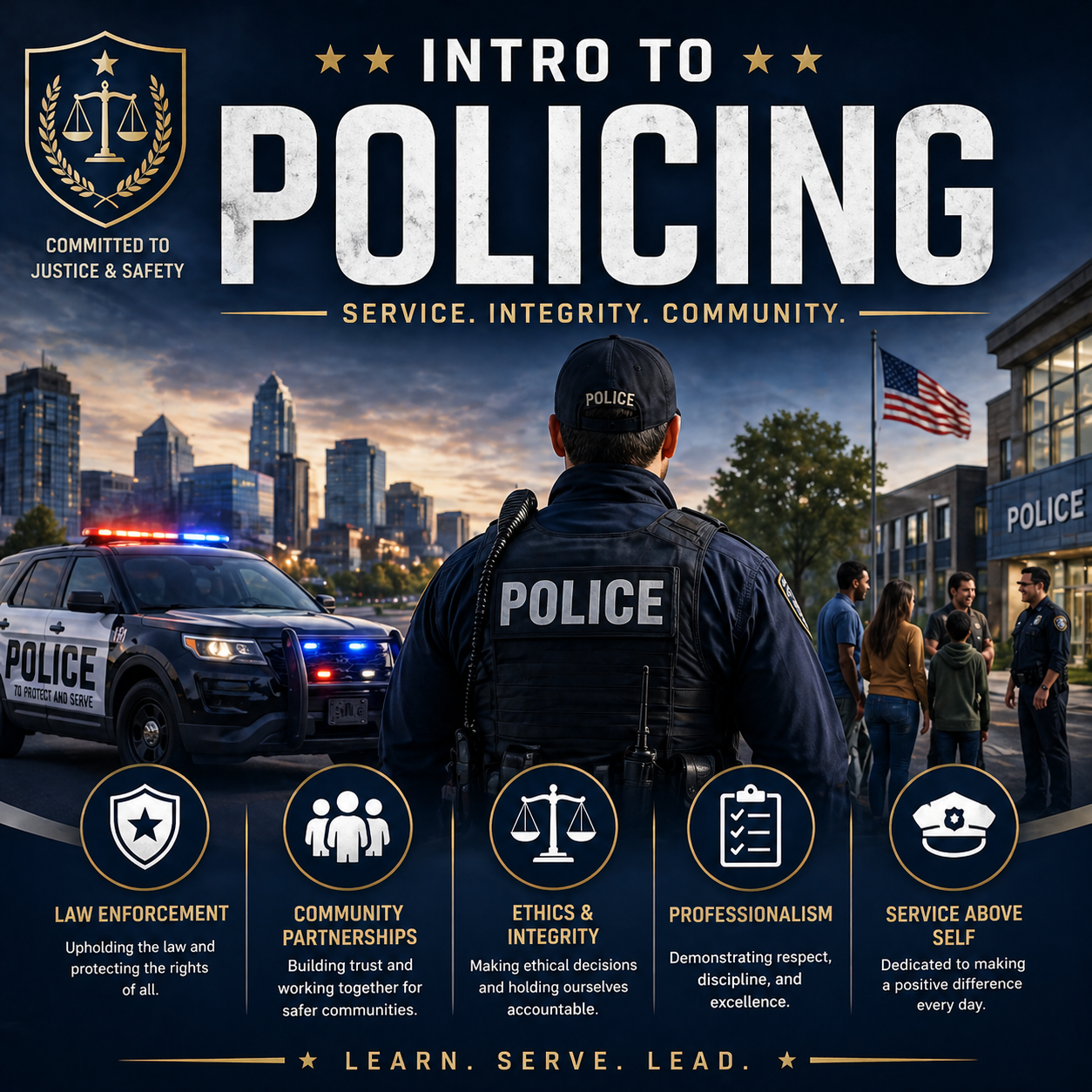
This course provides a foundational understanding of policing and its role within the broader criminal justice system. Learners will explore the core responsibilities of law enforcement officers, including crime prevention, maintaining public order, enforcing laws, and building community relationships. The course examines key policing models such as traditional, community-oriented, and problem-oriented policing, highlighting how each approach shapes officer behavior and public perception. Emphasis is placed on ethics, discretion, and professionalism in daily law enforcement activities. By the end of the course, participants will understand how effective policing balances enforcement with trust-building to enhance public safety and legitimacy.
This course provides a foundational understanding of policing and its role within the broader criminal justice system. Learners will explore the core responsibilities of law enforcement officers, including crime prevention, maintaining public order, enforcing laws, and building community relationships. The course examines key policing models such as traditional, community-oriented, and problem-oriented policing, highlighting how each approach shapes officer behavior and public perception. Emphasis is placed on ethics, discretion, and professionalism in daily law enforcement activities. By the end of the course, participants will understand how effective policing balances enforcement with trust-building to enhance public safety and legitimacy.